



Skin Care Products for Continence Care
Gentle wipes, cleansers, moisturisers and barrier products for skin exposed to urine, faeces, frequent washing and regular continence care.


Skin Care Products for Continence Care
Incontinence skin care protects the skin before it becomes sore. Urine, faeces, sweat, friction and repeated wiping place pressure on fragile skin, especially around the groin, buttocks, thighs and skin folds. Once redness, stinging or broken skin appears, continence care becomes harder and more uncomfortable.
This category brings together wipes, wash gloves, wash lotion, cleansing foam, moisturising lotion, skin tissues, protection foam and barrier cream. Each product has a different role in a proper care routine.
Clean the skin gently. Remove urine and faeces without harsh scrubbing. Moisturise dry or fragile skin. Add a breathable barrier where moisture keeps returning.
BetterCareMarket supplies Incontinence Products and NDIS Consumables as a Registered NDIS Provider, where the products match a participant’s plan and support needs.
How to choose the right continence skin care product
- If you need quick cleansing during a continence change, choose body wipes or wet wash gloves.
- If water is not readily available, or repeated washing is impractical, look for rinse free cleansing foam or moist skin care tissues.
- If dried urine or faecal matter needs to be removed, consider a cleansing foam that reduces the need for vigorous rubbing.
- If the skin feels dry after regular washing, add a body lotion to the daily routine.
- If you prefer washing with water in the shower, bath or wash bowl, choose a dedicated skin wash lotion rather than relying on harsh household soaps.
- If skin is repeatedly exposed to urine or faeces, use a suitable protection foam or barrier cream after cleansing and drying.
- If the skin is broken, bleeding, infected, very painful or not improving, seek advice from a GP, nurse or continence professional rather than relying only on skin care products.
Cleansing Wipes and Wet Wash Gloves
Wet Wash Gloves iD Care, Invizi Hygienic Body Wipes, Dailee Large Body Wipes and Serenity Cleansing Wet Wipes suit quick skin cleansing after pad changes, pull up changes, bowel leakage, bed care or travel.
iD Care Wet Wash Gloves come in packs of 8 gloves. They are pre moistened, double stitched, enriched with Aloe Vera, pH neutral, alcohol free, perfume free, dermatologically tested and suitable for warming in the microwave before care.
Invizi Hygienic Body Wipes measure 23cm x 30cm and come in 6 packs of 64 wipes, or 384 wipes per carton. They contain Aloe Vera, Vitamin E and Chamomile and are soap free, alcohol free, fragrance free and hypoallergenic.
Serenity Cleansing Wet Wipes come in a carton of 8 packs with 504 wipes. Dailee Large Body Wipes come in a carton of 576 wipes.
Rinse Free Cleansing Foam and Skin Care Tissues
MoliCare Skin Cleansing Foam and MoliCare Moist Skin Care Tissues suit incontinence care when water, showering or repeated washing is not practical.
MoliCare Skin Cleansing Foam comes in 400ml bottles, sold as a carton of 12. It is a rinse free foam for urine and faecal incontinence, with odour neutralising properties, a pH balanced formula and a gentle finish for fragile skin. It lifts dried faecal matter with less scrubbing and wipes away cleanly.
MoliCare Moist Skin Care Tissues come in packs of 50, sold in cartons of 12 packs, giving 600 wipes. They cleanse, moisturise and protect in one step. They are enriched with chamomile, dermatologically tested, alcohol free, perfume free and require no water.
Choose this group for bedside care, recurrent cleaning, aged care, disability support and carers managing frequent changes.
Wash Lotion and Body Lotion
MoliCare Skin Wash Lotion and MoliCare Skin Body Lotion suit daily skin care when incontinence, ageing skin or limited mobility increase dryness and irritation risk.
MoliCare Skin Wash Lotion comes in 500ml bottles, sold as a carton of 12. It is used in the shower, bath or wash bowl. The formula has pH 5.5 to support the skin’s acid mantle and contains panthenol and almond oil to nourish and hydrate the skin. It also has a refreshing scent with odour neutralising properties.
MoliCare Skin Body Lotion also comes in 500ml bottles, sold as a carton of 12. It is enriched with panthenol and almond oil and supports daily moisturising for delicate skin.
Choose these products when skin feels dry, tight or fragile after washing, or when a daily wash and moisturising routine is part of continence care.
Protection Foam and Barrier Cream
MoliCare Skin Protection Foam and MoliCare Barrier Cream protect skin from wetness and irritants after cleansing and drying.
MoliCare Skin Protection Foam comes in 100ml bottles, sold as a carton of 12. It forms a transparent protective film, is zinc oxide free and contains panthenol and urea to support moisture balance and skin regeneration. The product page notes that it does not reduce the absorbency of incontinence pads.
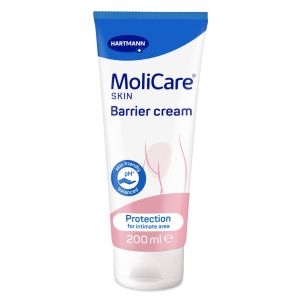
MoliCare Barrier Cream comes in 200ml bottles, sold as a carton of 12. It forms a water repellent breathable layer against urine, faeces and wound exudate. It is zinc oxide free, alcohol free, fragrance free, dermatologically tested and contains linseed oil, almond oil, amino acids, creatine and fatty acids.
Choose this group when redness, repeated wetness, fragile skin or daily pad use increases irritation risk.
How to Build an Incontinence Skin Care Routine
Start with the change routine. If continence products are changed often, the skin needs gentle cleansing each time. Use wipes or wash gloves for fast cleaning. Use cleansing foam when faecal matter needs lifting from the skin with less rubbing.
Then check the skin. Dry skin needs body lotion. Skin exposed to repeated moisture needs protection foam or barrier cream. A wash lotion belongs in shower, bath or bowl washing routines.
Avoid harsh soaps, strong fragrances and rough wiping around sensitive areas. Pat the skin dry before applying protection products. Barrier products work best on clean, dry skin.
For carers, keep the routine simple: cleanse, dry, moisturise if needed, then protect. Store wipes, gloves, skin cleanser and barrier cream close to the changing area. Add gloves and disposal bags from PPE & Cleaning if personal care involves urine, faeces or soiled continence products.
If skin is broken, bleeding, infected, very painful or not improving, speak with a GP, nurse or continence clinician.
Who can benefit from continence skin care?
Continence skin care products are useful whenever cleansing and skin protection form part of regular bladder or bowel care.
They are commonly used by:
- Adults managing urinary or bowel incontinence
- Seniors with delicate or dry skin
- People wearing pads, pull ups or adult nappies every day
- People with disability requiring continence support
- People with reduced mobility who receive bedside personal care
- Carers managing frequent continence changes
- NDIS participants who require continence related personal care products
- Families managing ongoing personal hygiene routines at home
They can also sit alongside other Incontinence Products and Bathroom Aids where toileting and personal care require extra support.
Incontinence skincare and NDIS consumables
For NDIS participants, incontinence skin care products often are eligeable as NDIS Consumables when they relate to disability support and match the participant’s plan. BetterCareMarket provides clear ordering support for families, carers, support coordinators and plan managers.
Takeaway
Incontinence Skin Care protects the skin that sits under pads, pull ups, briefs and nappies every day. Choose wipes and gloves for cleansing, foam and tissues for rinse free care, wash lotion and body lotion for daily skin condition, and barrier cream or protection foam when moisture keeps irritating the skin. A consistent routine reduces redness, discomfort, odour and avoidable skin breakdown.