



Voice Amplifiers for Parkinson’s and Dystonia
Portable voice amplifiers that make a quiet voice easier to hear during conversations, appointments, activities and community participation.
Voice Amplifier for Parkinson’s and Dystonia
Parkinson’s and dystonia can affect voice volume, making speech quieter or harder for other people to hear. Repeating yourself or trying to speak more loudly can also make everyday conversations tiring.
For those living with Parkinson's and Dystonia, a voice amplifier is the perfect speech therapy tool. A portable voice amplifier is a device used to amplify the voice. It is of great benefit to many people with this condition, as their voice volume is increasingly getting lower. A voice amplifier can make the speech audible and clearer, enabling family and friends to understand what you are saying.
When should you choose to get a voice amplifier
- If you want the lightest option for regular use, look for a compact rechargeable amplifier that clips to clothing or can be worn with a lanyard.
- If you need a larger waist-worn speaker for conversations, group activities or noisier settings, consider the Portable Voice Amplifier Model 100.
- If hand control is limited, check that the power and volume controls are easy for you or your carer to operate.
- If you plan to use the amplifier away from home, compare battery life, charging method, overall weight and the included carry accessories.
- If you wear glasses, hearing aids or headwear, check that the headset microphone sits comfortably without interfering with other equipment.
- If speech has recently become softer, unclear or difficult to produce, speak with a speech pathologist before relying on amplification alone.
Portable voice amplifiers offer invaluable support for individuals grappling with speech difficulties due to Parkinson's and dystonia. These compact devices enhance the user's voice, ensuring clearer and louder communication in various settings. With lightweight and portable designs, they facilitate ease of use and mobility, allowing users to carry them wherever they go. Featuring adjustable settings and additional functionalities like tone control and rechargeable batteries, these amplifiers cater to individual needs and preferences, empowering users to communicate with confidence and clarity in social interactions, public speaking engagements, and everyday conversations.
Compact rechargeable voice amplifiers
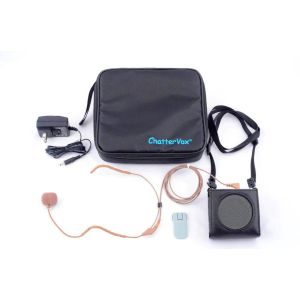
The Rechargeable Voice Amplifier Amplio is a small personal amplifier designed for portable everyday use. Its compact speaker and headset microphone make it suitable for conversations, appointments and activities where you want greater voice volume without carrying a larger device.
Waist-worn personal voice amplifiers
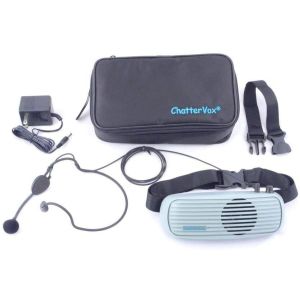
The Portable Voice Amplifier Model 100 uses a headset microphone connected to a waist-worn speaker. This style provides personal amplification while keeping your hands free. It may suit longer conversations, small groups and situations where a broader sound output is helpful.
Both products amplify the voice picked up by the microphone. They do not create speech, correct unclear pronunciation or treat the underlying communication changes associated with Parkinson’s or dystonia.
Who can benefit from this category?
A personal voice amplifier may be useful for:
People with Parkinson’s who have a soft or fading voice
People with dystonia that affects speech or voice production
People who are frequently asked to repeat themselves
People who find speaking loudly tiring
People who need clearer communication during appointments or group activities
NDIS participants working towards communication and community participation goals
Carers, family members and support workers who have difficulty hearing the person’s speech
A voice amplifier works best when the user can still produce understandable speech but needs additional volume. A speech pathologist can assess whether amplification, communication strategies or another type of communication aid is more appropriate.
NDIS and voice amplification
A personal voice amplifier may be considered communication assistive technology when it is directly related to a participant’s disability and supports communication, independence or community participation goals.
NDIS funding is not automatic. Eligibility depends on the participant’s individual needs, plan, available funding and current NDIS rules. A speech pathologist may be able to provide supporting advice or evidence about why the device is required.
BetterCareMarket is a Registered NDIS Provider. Check with your speech pathologist, support coordinator or plan manager before ordering with NDIS funding if you are unsure about eligibility.
Takeaway
Make your voice easier to hear without using more effort than the conversation should require.