



Wheelchair & Mobility Ramps for Safer Home Access
Find wheelchair and scooter ramps to support safer access over doorways, thresholds, steps and everyday entry points.
Ramps for Wheelchairs, Scooters and Safer Everyday Access
Small steps, raised doorways and uneven entry points can make daily movement harder when you use a wheelchair, mobility scooter, rollator or walker. The right ramp can help create smoother access at home, in care settings or during everyday outings.
This range includes wheelchair ramps, scooter ramps and rubber threshold ramps in different sizes. These Mobility Aids may suit wheelchair users, scooter users, seniors, carers, NDIS participants and people with limited mobility who need safer access through common home and community spaces.
How to choose the right ramp
- If you need help over a small doorway lip, look for a rubber threshold ramp.
- If you need access over a step, check the height of the rise before choosing the ramp length.
- If you use a wheelchair, check ramp width, weight capacity and whether the wheels fit safely.
- If you use a mobility scooter, check the ramp width, surface grip and total loaded weight.
- If the ramp will be moved between locations, look for a portable or lightweight option.
- If the ramp will stay in one place, look for a size and material suited to the entry point and daily use.
- If the surface may get wet, look for grip, drainage and stable placement.
- If a carer will assist, check whether the ramp is easy to position, lift, store and use safely.
- If the access point is steep or complex, ask an occupational therapist or qualified access professional before purchasing.
Access Ramps Product Guide
Wheelchair ramps
Wheelchair ramps help create a smoother path over steps, raised thresholds or small access barriers. They may suit manual wheelchair users, powered wheelchair users and carers supporting daily access. Always check ramp length, width, weight capacity and the height of the rise.
Scooter ramps
Scooter ramps need to suit the scooter’s wheelbase, width and combined weight of the scooter and user. They can support access over suitable entry points, but the ramp must match the scooter and the space.
Rubber threshold ramps
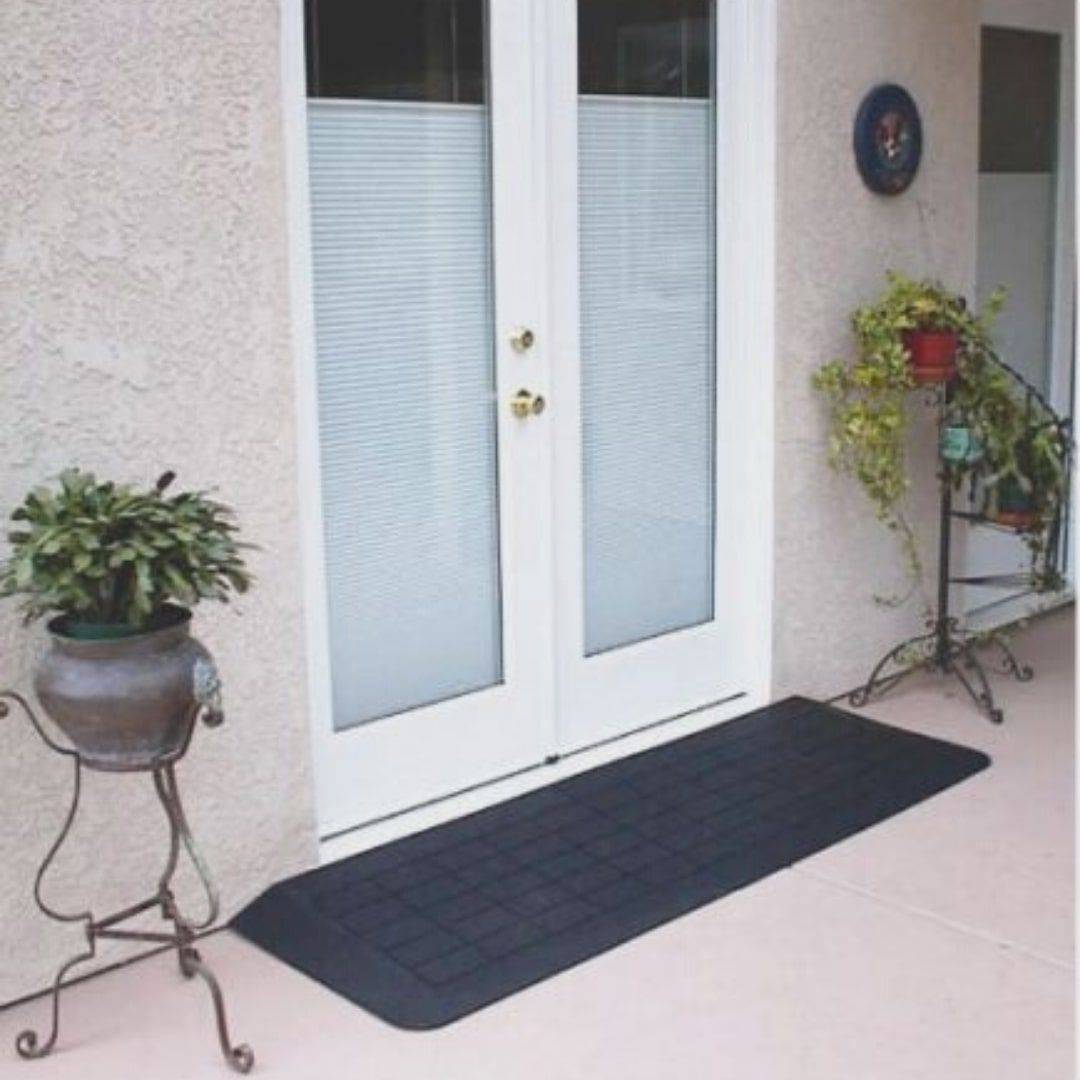
Rubber threshold ramps are designed for smaller height changes, such as doorway lips, sliding door tracks or low indoor and outdoor thresholds. They are useful where a full ramp is not needed but the transition still causes difficulty.
Portable access ramps
Portable ramps can help when access needs change or the ramp needs to be used in different areas. They may suit carers, support workers or people who need a temporary access option. Check product weight and storage space before choosing.
Home access ramps
Home access ramps can support safer movement between rooms, entrances, verandas or outdoor areas. They may be useful as part of a broader home mobility setup alongside Walking Aids, transfer chairs, wheelchairs, mobility scooters, grab rails or other Independent Living Aids.
Ramp safety features
Useful ramp features can include a stable surface, suitable grip, strong edges, correct width and the right weight capacity. A ramp should sit securely and match the access point, mobility device and user needs.
Who can benefit from this category?
Ramps may suit people who use wheelchairs, mobility scooters, rollators, walkers or other Mobility Aids and need smoother access through everyday spaces. They can also help carers reduce awkward lifting or difficult manoeuvres over small steps and thresholds.
This category may be useful for seniors, people with disability, NDIS participants, people recovering from injury and families making home access more practical.
NDIS and independent living note
Ramps may relate to home access, daily living goals, community participation and safer movement around the home. Some ramps may be NDIS eligible when they match your disability support needs and plan goals.
BetterCareMarket is a Registered NDIS Provider. Funding approval is not automatic, so check with your occupational therapist, support coordinator or plan manager before purchasing, especially if the ramp is part of a home access plan.
Takeaway
The right ramp should make access smoother, safer and easier, so your home and daily spaces feel less restrictive. Contact our team to share your special needs for custom made ramps.