



Toileting Aids for Safer and Easier Access
Practical commodes and urinals that reduce the distance, effort and risk involved in toileting at home, overnight, during recovery or with limited mobility.
Toilet Aids, Commodes & Urinals
Getting to the toilet is not always simple. Night time urgency, reduced mobility, surgery recovery, hip or knee pain, disability, fatigue, dementia, falls risk and incontinence all change how a person manages toileting.
Toilet Aids bring the toilet closer, reduce rushed bathroom trips and make toileting safer for the user and the carer. This category includes bedside commodes, folding commodes, bariatric commodes, male urinals, women’s urinals and unisex urinals for use at home, in bed, beside a chair, during travel or in care settings.
Choose this category when the problem is access to the toilet, not absorbency. Incontinence Products manage leakage. Toilet Aids support toileting itself. Many people need both, especially overnight or after surgery.
BetterCareMarket supplies Bathroom Aids, Daily Living Aids, Independent Living Aids and toileting products as a Registered NDIS Provider where they match the participant’s plan and support needs.
How to Choose Toilet Aids
Start with the toileting problem.
- If walking to the bathroom at night is difficult or unsafe, look for a bedside commode positioned close to the bed.
- If you need a commode that stores away easily, choose a lightweight folding model.
- If the user needs a wider seat or higher weight capacity, look for a bariatric commode with a suitable safe working load and enough space between the armrests.
- If the person remains in bed or seated for long periods, choose a portable urinal that matches their anatomy and usual toileting position.
- If a urinal needs to be carried after use, choose a model with a secure lid to reduce spills.
- If several people may use the same product, consider a unisex urinal with an adaptor.
- If transfers are difficult, prioritise stability, arm support, seat height and available space around the commode rather than portability alone.
Check cleaning before buying. Buckets, lids, removable pans, smooth surfaces and wipe down frames make care easier. For urinals, a lid reduces spills and odour during transport to empty.
Think about transfers. A person who stands safely needs different support from someone who toilets while lying down. A carer supported user often needs more stability, more space and easier cleaning than an independent user.
Bedside Commodes
Bedside commodes give a toilet option in the bedroom, lounge room or care space. They suit people who struggle to reach the bathroom in time, especially at night. They also reduce rushed walking, which matters for people with falls risk, weak legs, dizziness, pain or low mobility.
The Folding Commode from Aidapt is a foldable stand alone toilet with bucket, lid and backrest. It has a fixed height of 77cm, seat height of 45cm, seat width of 40cm, total width of 53cm and maximum user capacity of 130kg. It weighs 4kg.
The Multifunctional Bedside Commode suits home recovery after hip or knee surgery, as well as general limited mobility care. Choose this group when toileting needs to happen close to the bed or chair.
Folding and Portable Commodes
Folding commodes suit smaller homes, temporary recovery, guest stays, travel and carers who need equipment that stores away between uses. They create a toilet option without permanent bathroom changes.
The Aluminum Folding Commode has a lightweight frame, folds flat and comes with a bucket and lid. It has a maximum user weight of 136kg, seat height from 46cm to 58.5cm, width between arms of 45.5cm and net weight of 2.25kg. Folded width is only 5cm, making it easy to store.
Choose a folding commode when portability matters. It is a practical option after surgery, during short term illness, for overnight use or when the bathroom is too far away for safe access.
Bariatric Commodes
Bariatric commodes suit larger users who need a wider, stronger and more stable toileting aid. Standard commodes often feel too narrow or lack the safe working load required for comfortable use.
The Bariatric Commode has a steel frame, wider contoured seat, padded armrests, foam covered back, non-slip rubber feet and a removable bucket, splashguard and lid. It works as a bedside commode, over toilet frame or raised toilet seat. The seat height adjusts, the seat clips off for cleaning and the maximum weight capacity is 226kg.
Choose a bariatric commode when size, stability and transfer confidence matter. It suits home care, disability support, aged care, post-surgery recovery and carers who need a safer toileting setup for larger body shapes.
Men’s Urinals
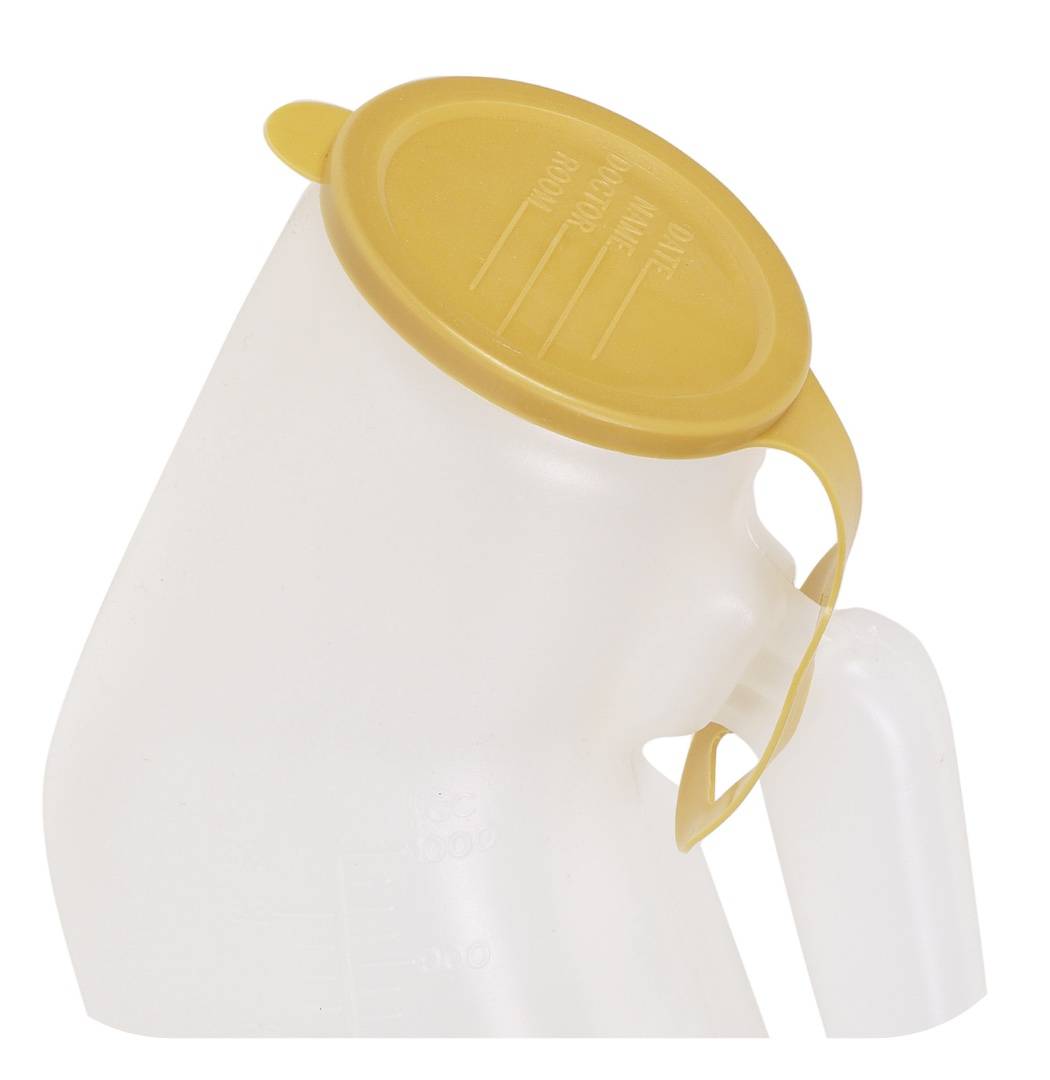
Male urinals give a practical toileting option when standing, walking to the bathroom or transferring to a toilet is difficult. They suit bed use, chair use, travel, car journeys, night time urgency and limited mobility.
The PQuip Male Urinal has a 1000ml capacity, measurement markings, a sturdy grip, attached lid and translucent lightweight bottle. It is durable, easy to clean and disinfect, and free from sharp edges.
The Aidapt Male Urinal Bottle with Lid has a 1 litre capacity, integrated carry handle, angled design and anti-spill lid. It suits lying, sitting or standing positions. Choose male urinals for urgent bladder emptying, night time use, bed care, travel and situations where walking to the toilet increases falls risk.
Women’s Urinals
Women’s urinals are shaped for female anatomy and give a more dignified toileting option when the bathroom is hard to reach. They suit women with reduced mobility, hip pain, knee pain, back pain, bed confinement, wheelchair use or bladder urgency.
The Aidapt Female Urinal with Lid has a 1 litre capacity, secure lid, durable construction and easy clean design. It supports use while lying down, seated or standing.
The PQuip Female Urinal with Lid also has a 1 litre capacity and a wide funnel shape with a spill resistant lid. The PQuip Female Urinal without lid suits simple home or care use where a lid is not required. Choose a lidded option for travel, bedside use or easier transport to empty.
Unisex Urinals
A unisex urinal gives one bottle for different users. It is practical for shared homes, care settings, travel, camping, emergency toileting and mixed support needs.
The Aidapt Urinal with Unisex Adaptor has a 1 litre capacity and includes an adaptor that changes the opening for use by men and women. It has a secure cap, carry handle and lightweight plastic body. This urinal measures 21.5cm high, 10cm deep, 9.5cm wide, has a 5.8cm opening and weighs 85g.
Choose this product when a household or support team wants one portable urinal instead of separate male and women’s bottles. It suits bedside use, vehicle travel, care facilities and situations where privacy and speed matter.
Who can benefit from toileting aids?
Toileting aids are useful when getting to or using a standard toilet becomes difficult.
They are commonly chosen for:
- Seniors with reduced mobility
- People with disability
- NDIS participants requiring toileting support
- People recovering from hip, knee or other surgery
- Wheelchair users
- People experiencing fatigue or weakness
- People who need frequent night time toileting
- People with bladder urgency
- Larger users requiring bariatric support
- Carers assisting with toileting and transfers
These products often work alongside Bathroom Aids, Daily Living Aids and Independent Living Aids as part of a broader personal care and home safety routine.
Toitel Aids and the NDIS Consumables
For NDIS participants, toilet aids often fall under low cost assistive technology or Daily Living Aids when they relate to disability support needs and match the participant’s plan. BetterCareMarket provides clear ordering support for participants, families, carers and support coordinators.
Takeaway
Choose the aid that removes the biggest toileting barrier.
Use a bedside commode when walking to the toilet is the problem, a folding model when storage matters, a bariatric commode when extra width and strength are needed, and a male, female or unisex urinal when toileting needs to happen from the bed or chair.