



Fitness & Rehabilitation Equipment for Recovery and Movement
Find practical equipment for strength, mobility, joint support and rehabilitation at home, during recovery or as part of a therapy plan.
Fitness & Rehabilitation Equipment for Recovery
Recovery often continues long after a hospital visit, physiotherapy session or medical appointment. The right equipment helps you practise movement, rebuild strength and manage daily activity with greater control.
This category brings together Exercise Equipment, Braces & Supports and Rehabilitation Equipment for people recovering from injury, surgery, illness or changes in mobility. It also supports seniors, NDIS participants, carers and anyone following a structured exercise or therapy plan.
How to choose the right product
Start with your main goal.
- If you want to improve strength, flexibility, balance or general movement, explore Exercise Equipment.
- If a joint needs extra stability, compression or protection during activity, browse Braces & Supports.
- If you are completing prescribed exercises, recovering function or managing reduced mobility, choose Rehabilitation Equipment.
Match the product to your current ability, not where you hope to be later. The right resistance, size and level of support should allow safe, controlled movement without forcing the body through pain.
Fitness and rehabilitation product guide
Exercise Equipment
Exercise equipment helps improve strength, endurance, balance and flexibility at home.
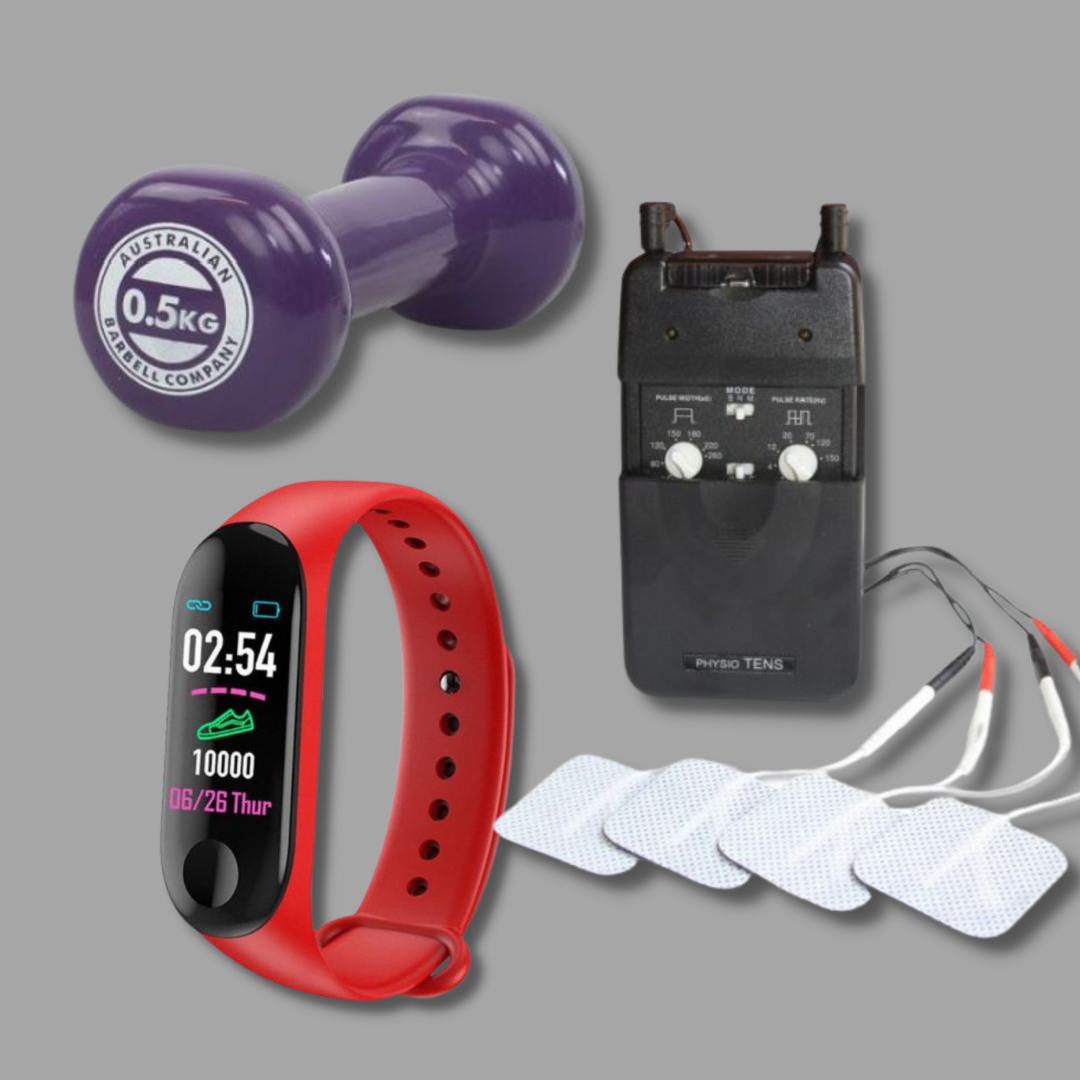
This section can include resistance bands, pedal exercisers, hand exercisers, balance products, stretching equipment, fitness activity trackers and other compact fitness tools. Many options suit seated exercise, gentle movement or gradual progression during recovery.
Choose equipment according to your starting level and the type of movement recommended by your physiotherapist, exercise physiologist or healthcare professional.
Braces & Supports
Braces provide stability, compression and protection around injured, weak or painful joints.
The range covers common areas such as the wrist, elbow, shoulder, back, knee and ankle. Some braces are designed for light everyday support, while others provide firmer control during rehabilitation or physical activity.
A brace should fit securely without restricting circulation or creating pressure points. Select the level of support according to the injury, activity and advice from your treating professional.
Rehabilitation Equipment
Rehabilitation equipment assists with controlled movement, muscle activation, transfers and functional recovery.
This section can include shoulder pulleys, leg lifters, hand therapy tools, professional massage guns, TENS devices, foot circulation promotor, hot and cold therapy products, back stretchers and other equipment used during home rehabilitation.
These products work best as part of a clear therapy plan. Correct setup, technique and progression are essential for safe use.
Who can benefit from this category?
This category suits people recovering from surgery, injury, stroke, illness or a period of reduced activity.
It is also relevant for seniors, people with disability, NDIS participants, athletes, carers and anyone completing physiotherapy or occupational therapy exercises at home.
Healthcare professionals also use these product groups when recommending equipment for strength, mobility, joint protection and functional recovery.
NDIS and fitness and rehabilitation
Some fitness and rehabilitation products are NDIS eligible when they relate directly to an eligible participant’s disability, functional needs and approved plan goals.
Relevant products can include exercise aids, rehabilitation equipment, Braces & Supports and selected Independent Living Aids that improve mobility, daily activity or participation.
General fitness products are not automatically funded. Eligibility depends on how the item relates to the participant’s disability and support needs.
BetterCareMarket is a Registered NDIS Provider. Speak with your physiotherapist, occupational therapist, support coordinator or plan manager when you need to confirm product suitability or funding.
Takeaway
Choose equipment that matches your current ability and recovery goal. Safe progress comes from controlled movement, correct technique and the right level of support.