Short answer:
The Push Med Ankle Brace Aequi Flex is designed for structured medial ankle support following a Grade II or III ankle sprains, if you have chronic or moderate-to-severe ankle instability, or if you are recovering from a significant sprain or surgery.
Choose the Push Sports Ankle Brace 8 if you're recovering from a minor sprain or want a thin, compression-based brace to prevent re-injury during sport. The short version: Aequi Flex is built for stability and rehabilitation, and the Sports Ankle Brace 8 is built for active prevention and light support.
Ankle sprains are the most common injury in sport and daily life, and occur when the foot turns, twists or rolls beyond its normal motion. It happens roughly 230,000 times in Australia each year. Despite how common they are, most people often make the wrong brace choice based on price or availability rather than what their ankle actually needs. A brace that works well for a recreational netball player guarding against a repeat sprain can be the wrong support entirely for someone managing chronic ligament instability or recovering from surgery.
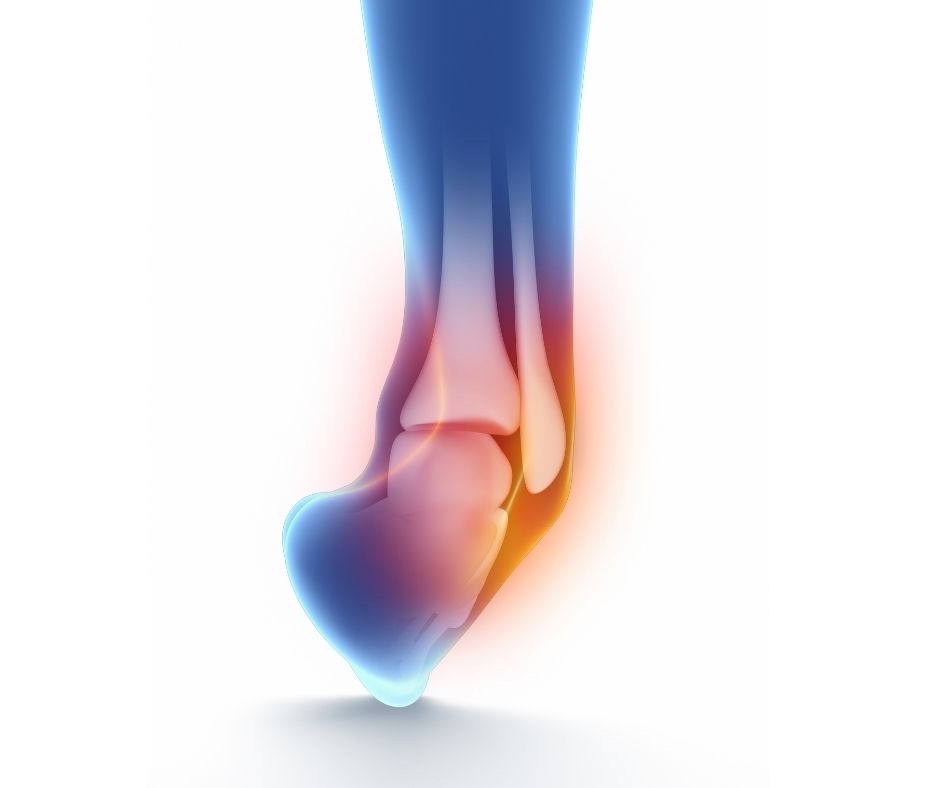
Two braces that regularly come up in the same conversation are the Push Med Ankle Brace Aequi Flex and the Push Sports Ankle Brace 8. Both come from the same trusted Push brand, and both are well-regarded, but they're engineered for different ankle conditions. Using the wrong one can mean under-support, a slower recovery, or both.
This guide breaks down what each brace is designed to do, who each one suits, how they compare side by side, and how to choose the right level of ankle support for your situation.
The Main Difference
The core difference comes down to structural support versus compression support.
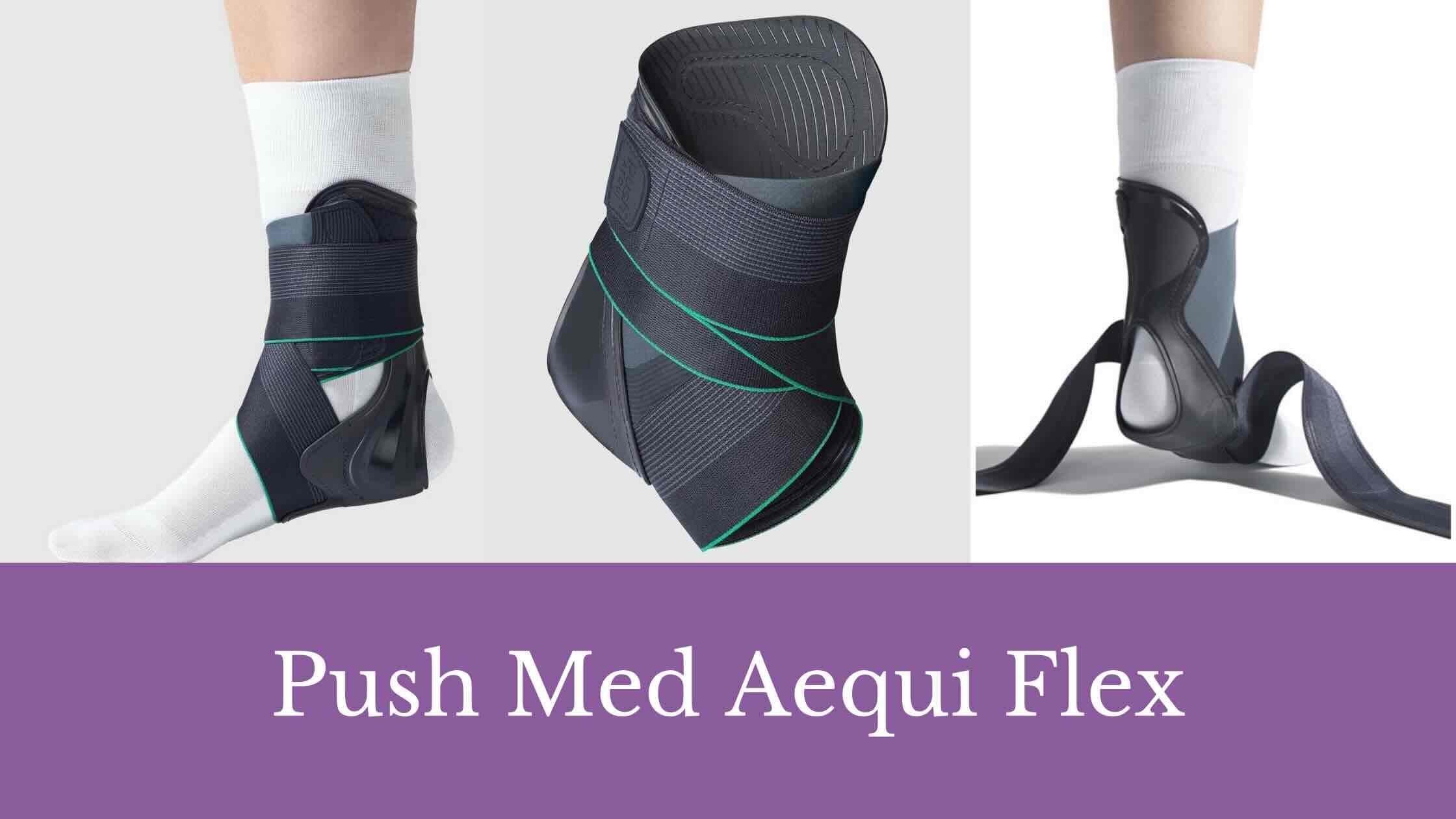
The Push Med Aequi Flex is an orthopaedic ankle splint intended to provide mechanical control to your ankle rolling inward or outward. This stabilisation brace is built around a semi-rigid Flex-protect shell and patented medial support, while using two functional elastic straps to allow you to adjust the level of compression desired. Rather than completely immobilising the ankle joint, the brace places a physical limit on excessive side-to-side movement while retaining enough function for appropriate activity.
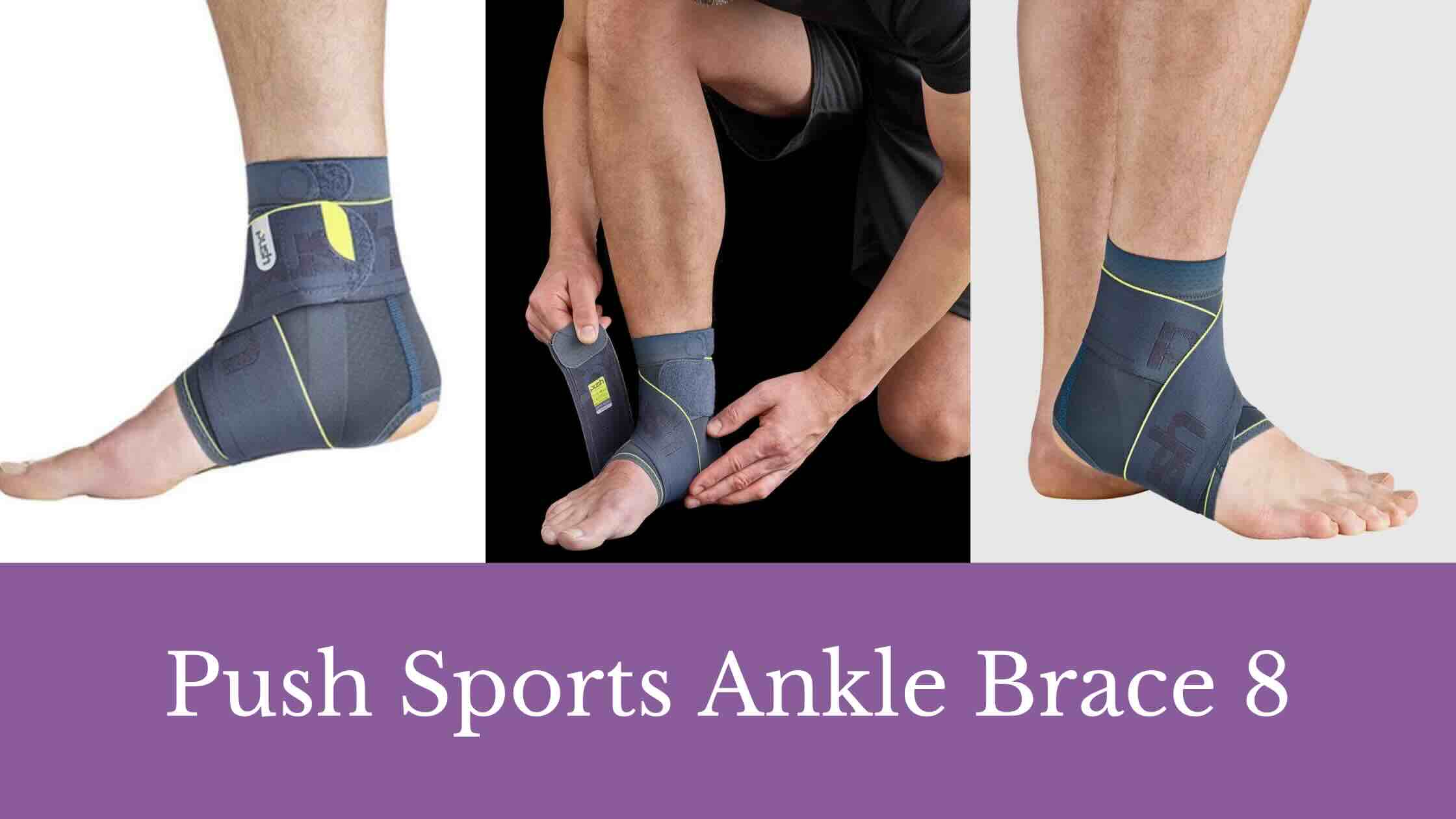
The Push Sports Ankle Brace 8 is an ultra-thin compression brace, incorporating a figure 8 strap. It uses adjustable straps and anti-slip strips to provide light, functional support and compression, without the rigidity of a medical-grade brace. The adjustable straps help controle the swelling and the brace stability.
In short: the Aequi Flex protects the ankle joint that needs real structural stability after a significant sprain.
The Push Sports Ankle Brace 8 supports a joint that's basically sound but benefits from extra support. Ideal for minor strains.
Push Med Ankle Brace Aequi Flex: Built for Stability and Returning to Activity
The Aequi Flex uses a Flex-protect shell - rigid through the centre, softer toward the edges - combined with patented support on the inner side of the ankle to resist inward rolling. A diagonal strap adds extra stability, and two stretchy figure-8 straps let you adjust compression. The aim is to deliver side-to-side support while still allowing the ankle to move during walking, rehabilitation and suitable sporting activity.
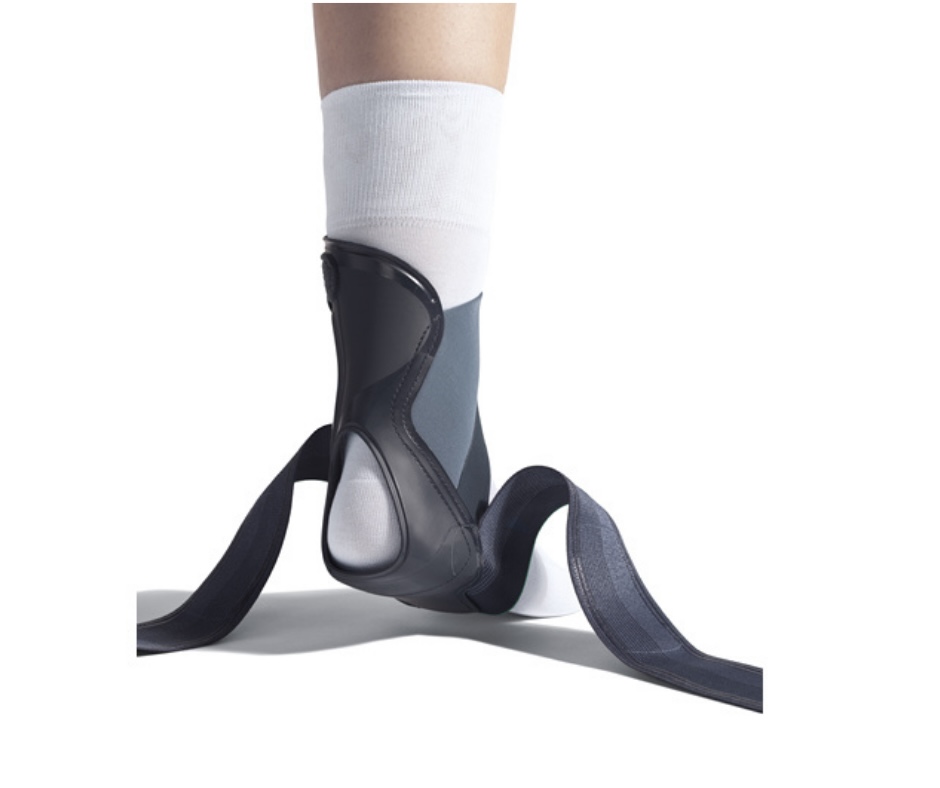
In an independent study by the Fraunhofer Institute, the Aequi Flex was the best performing brace – out of the 6 tested – at resisting inward rolling.
Who is the Push Med Aequi Flex designed for?
- People with moderate to severe or long-term ankle instability, from repeated sprains that has weakened the ligaments over time
- Anyone recovering from a serious grade II or grade III sprain. This involves moderate to severe ankle ligament damage, causing noticeable to severe pain, normal to major swelling, significant bruising and painful walking or even not being able to bear any weight on the ankle.
- Individuals recovering from ankle surgery or an ankle fracture, where the ankle needs controlled support as tissue heals
- Adults who feel unsteady on their ankle and want reliable, structured support for daily activities
Key features of the Aequi Flex
This ankle brace lets your ankle move naturally up and down, but stops it from excessive inward rolling, which is the specific movement that causes most sprains. This means it protects the joint without locking it in place, so recovery isn't slowed down.
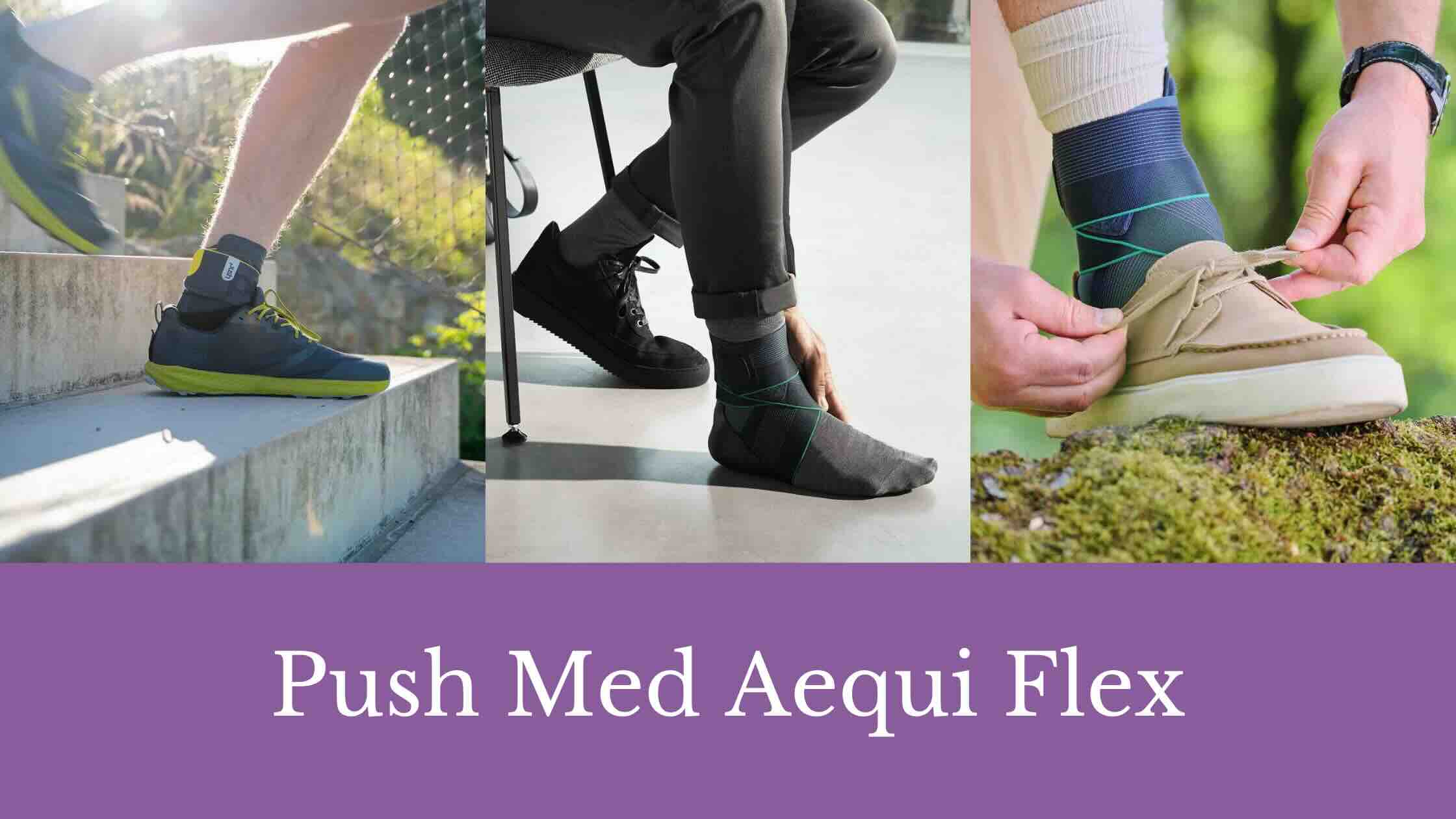
It's adjustable, fits comfortably over a sock, and works well for all-day wear. Its semi-rigid shell also helps your brain and nerves ‘relearn’ where your joint is in space; something physiotherapists often say is important for full recovery. According to Push, the brace is supportive enough that many people can start putting weight on the ankle earlier, which may help speed up the recovery.
Push Sports Ankle Brace 8: Built for Active Recovery and Prevention
The Push Sports Ankle Brace 8 was developed for athletes and active people who want low-bulk support they can wear through training, daily activity, and recovery.
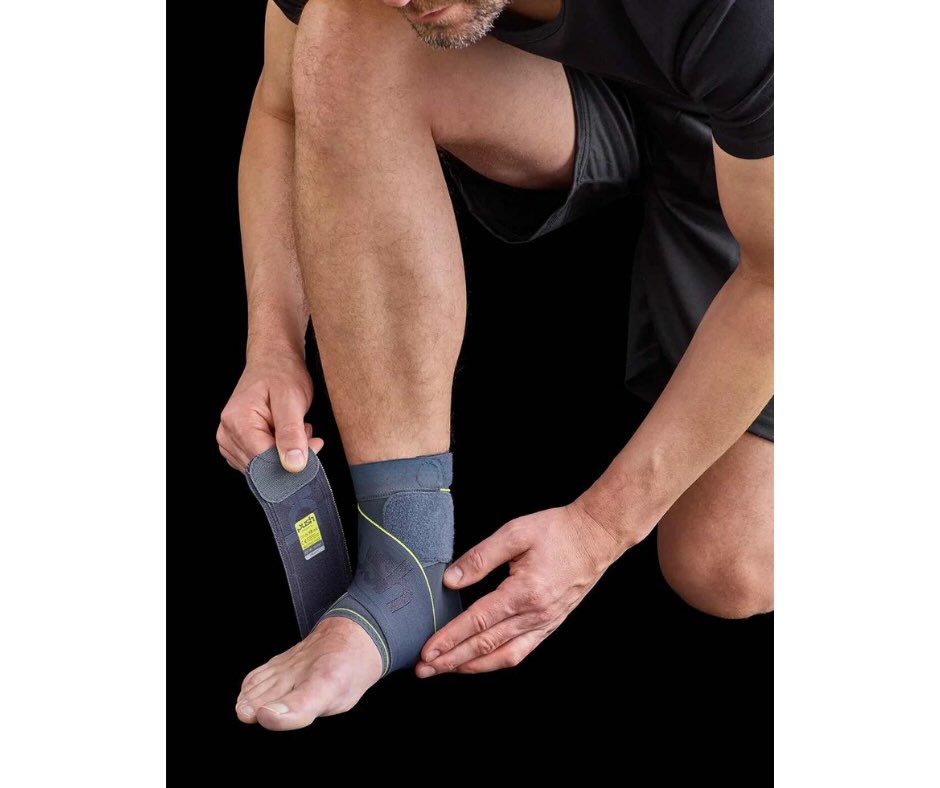
Its ultra-thin fabric delivers comfortable compression around the joint without cast-like bulk, and internal anti-slip strips keep it in place during movement.
Who is the Push Sports Ankle Brace 8 made for?
- People recovering from a minor ankle sprain or strain who want supportive compression during everyday activity
- Athletes returning to sport after a minor sprain who want protection without sacrificing performance
- Athletes using bracing preventively, especially those with a history of minor sprains but no ongoing structural instability
- Anyone who's found traditional ankle braces too bulky for their footwear or activity
Key features of the Push Sports Ankle Brace 8
The Figure 8 straps mimic ankle tapes and let you fine-tune compression and stability independently, so the brace can flex with where you are in recovery on any given day, without restricting movement.
Internal thermoplastic polyurethane anti-slip strips stop the brace migrating during play. It is a great brace for rolled ankles as it prevents lateral twisting.
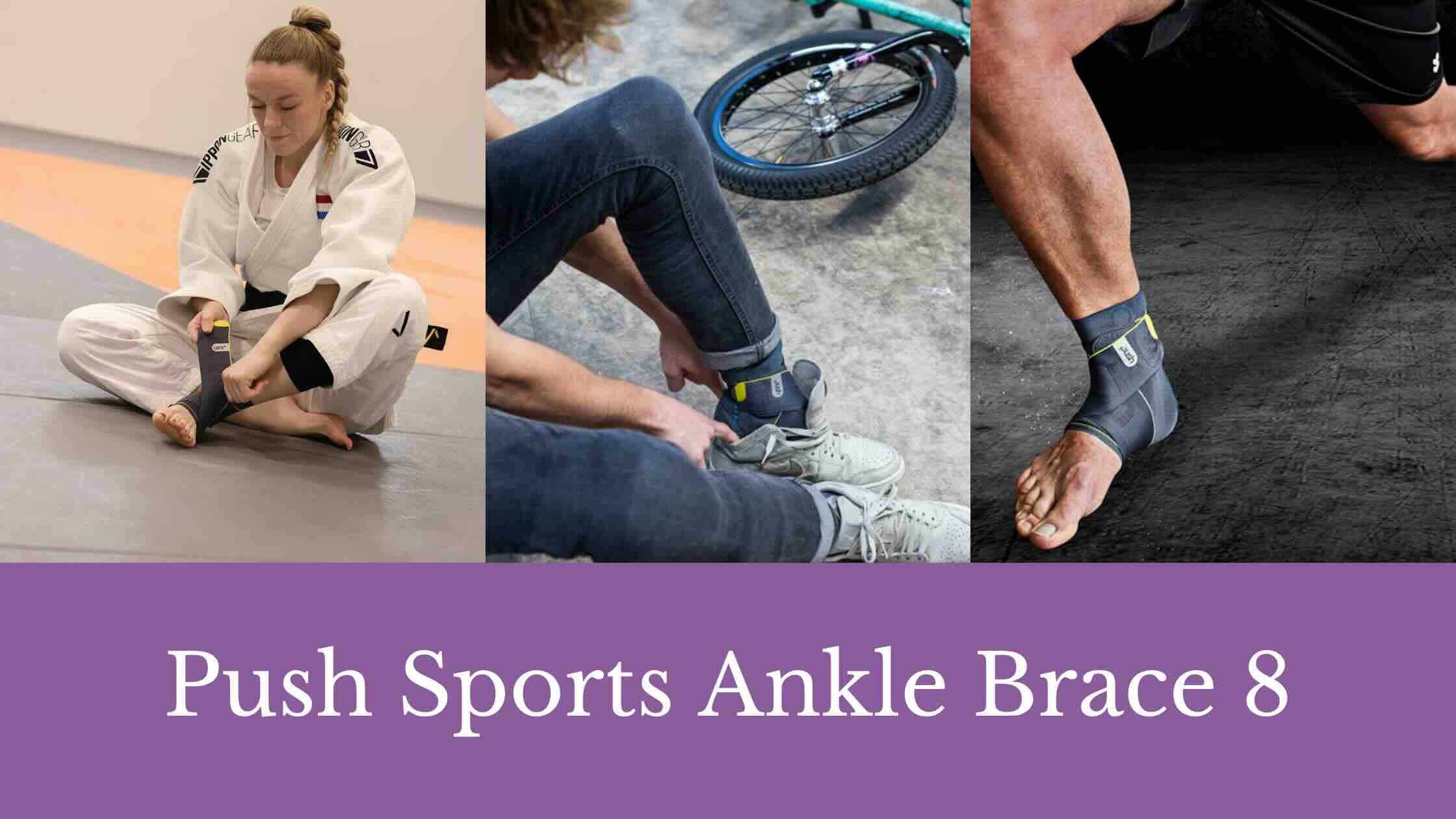
Its ultra-thin profile fits comfortably with or without a shoe, sliding into most standard athletic footwear without needing to size up. It's lightweight enough for long days at work or on the field, and the fabric is latex-free and machine washable.
Where the Push Sports Ankle Brace 8 falls short?
It isn't the right choice for genuine chronic instability or recovery from a significant ligament injury. Its support is compression-based and functional rather than structural.
If your ankle is actively unstable, prone to rolling without much provocation, or you're in a post-surgical phase, this brace won't offer enough protection. The Push Med Aequi Flex would be the appropriate option in those cases.
Aequi Flex vs Push Sports Ankle Brace 8: Side-by-Side Comparison
The key difference between the two ankle braces is structure. The Ankle Brace 8 by Push Sports is perfect for light compression and reassurance, but it generally offers limited mechanical resistance to a sudden ankle roll.
The Push Med Ankle Brace Aequi Flex is recommended for Grade I and Grade II ankle sprains with structured side-to-side support while still allowing the ankle to function during appropriate sporting activity, walking and rehabilitation.
|
Feature |
Push Med Ankle Brace Aequi Flex |
Push Sports Ankle Brace 8 |
|
Primary purpose |
Structural stabilisation and rehabilitation |
Active prevention and light compression support |
|
Best for |
Moderate/severe or chronic instability, post-injury/post-surgical ankle recovery |
Minor ankle sprains, prevention, return to sport |
|
Support type |
Semi-rigid Flex-protect shell + patented lateral support |
Adjustable compression straps + anti-slip strips |
|
Movement restriction |
Limits rolling in; allows natural movement |
Light, functional support; no rigid structure |
|
Profile |
Low-profile, worn over a sock |
Ultra-thin; fits inside most sport shoes |
|
Ideal wear setting |
Daily wear, rehab, sport, post-surgical protection |
Training, competition, everyday activity |
|
Material |
Semi-rigid shell with elastic straps |
Latex-free, machine-washable fabric |
|
Not recommended for |
N/A. It suits the full spectrum from daily wear to sport |
Confirmed chronic instability or significant ligament injury |
Which Brace Is Right for You? Two Common Scenarios
Scenario 1: The recreational netball player managing minor, recurring sprains.
A 28-year-old recreational netball player has rolled the same ankle two or three times this season and wants to keep playing without fear of another sprain. There's no confirmed structural instability ; they simply want confident protection during training and games. The Push Sports Ankle Brace 8 is the logical choice: ultra-thin enough to fit in any athletic shoe, with adjustable compression and stability that reduces re-sprain risk without limiting movement.
Scenario 2: The adult with diagnosed chronic instability.
A 45-year-old has been told by a physiotherapist that they have chronic lateral instability after years of repeated sprains. Their ankle occasionally gives way, and they've lost confidence going down stairs. This person needs the Aequi Flex. The Push Sports Ankle Brace 8 won't adequately manage structural instability during everyday activity, let alone sport.
The difference between preventing a sprain and managing existing instability is what Sports Medicine Australia emphasises. In both cases, it is recommended to follow a rehabilitation program for the ankle to reduce the risk of reoccurrence, including an ankle brace or ankle taping until full function is restored.
Bracing for prevention requires less support than bracing for active structural instability. Confusing the two leads to either over-bracing - which can affect proprioception and muscle development over time - or under-bracing, which leaves the joint vulnerable.
If you're unsure where you fall, don't self-diagnose chronic ankle instability. A physiotherapist or orthopaedic specialist can assess ligament integrity and confirm the right level of support — that clinical input matters more than any product description.
Sizing, Fit, and Practical Wearing Tips
Fit matters as much as the brace itself. Too loose, and the brace shifts during movement, giving false confidence without real support. Too tight, and it can restrict circulation and cause discomfort that leads people to stop wearing it altogether.
Both braces come with sizing guides based on foot or ankle circumference. Measure the narrowest point of your ankle and check it against BetterCareMarket's sizing chart before ordering. Both ankle braces come in a specific left or right brace.
Push Sports Ankle Brace 8 sizes
|
Size |
Measurement around instep |
|
S |
20 – 22.5cm |
|
M |
22.5 – 25.5cm |
|
L |
25.5 – 28cm |
Push Med Ankle Brace Aequi Flex sizes
|
Size |
Measurement around instep |
|
S |
27 – 31cm |
|
M |
31 – 34cm |
|
L |
34 – 40cm |
A few practical tips:
Wear a thin, breathable sock under the brace to reduce friction and improve hygiene during extended use
Check the closure system regularly, especially after sport, since straps can loosen over time
If using either brace post-injury, start with lower-intensity activities and build up gradually as confidence and healing progress
Neither brace replaces a structured rehabilitation program — strengthening the peroneals and improving balance through proprioceptive training remains the most effective long-term approach to ankle stability
The full range, including both braces covered here, is available through the BetterCareMarket ankle brace collection, with detailed specs and sizing information to help you choose.
Key Takeaways
The Aequi Flex is the stronger ankle brace choice for chronic lateral instability, post-injury rehabilitation, and post-surgical or post-fracture support, where structured medial-side stabilization is needed.
The Push Sports Ankle Brace 8 suits active recovery from minor sprains and prevention of recurring injury, with an ultra-thin compression profile that fits inside most athletic shoes.
Matching the brace to your level of instability matters more than brand or price.
While both braces enhance joint awareness, they differ significantly in support level and mechanism: one relying on rigid medial structure and the other on adjustable compression.
If you're unsure whether your ankle has chronic structural instability or just needs preventive support, get a physiotherapy assessment before choosing a brace.
Frequently Asked Questions
Can I use the Push Sports Ankle Brace 8 if my ankle keeps giving way?
Not reliably. The Push Sports Ankle Brace 8 works well for active people recovering from a Grade I ankle sprains: slight tearing of the ligament with mild swelling, stiffness and tenderness. It also prevents recurring injury, but it won't provide enough structural support if you have confirmed chronic lateral instability or ligament damage that causes the ankle to give way regularly. The Push Med Aequi Flex, or another higher-grade brace, is the more appropriate option in that situation as it is primarily a stabilising orthosis.
Can I wear the Aequi Flex during sport?
Yes. This is one of its core uses. The Aequi Flex suits anyone needing structural ankle support, whether that's managing chronic instability, recovering from Grade II injury, preventing recurring sprains, or wanting reliable stability during sport. It fits comfortably in most running, training, and athletic shoes, and its Flex-protect shell combined with figure-8 compression straps allows natural movement while limiting the inversion that causes most sprains. Many people with confirmed ankle instability rely on it for ongoing protection during sport, training, and daily activity.
How long should I wear an ankle brace after a sprain?
Generally, six months to a year. A brace's role shifts through that period — providing structural support and protection during the initial healing phase, then continuing as a preventive measure as you return to full activity. Ligaments take longer to fully recover than symptoms suggest, so ongoing use during the months after a sprain meaningfully reduces the risk of recurrence, even once pain and visible swelling have resolved. A physical therapist can guide the specific timeline based on your sprain severity and recovery progress.
Do ankle braces weaken the muscles over time?
No. Used appropriately - including over the 6-12 months period commonly recommended after a sprain - a brace doesn't weaken surrounding muscles, when paired with targeted strengthening work. It protects the joint while muscles are retrained and ligaments continue healing. The Push Med Aequi Flex specifically adds proprioceptive feedback through its semi-rigid shell, actively supporting muscle and nervous-system retraining. Bracing and strengthening work together, not as alternatives.
Where can I find both of these braces and compare them properly?
Both are available through BetterCareMarket, where you can view sizing guides, product specifications, and detailed descriptions to compare them side by side based on your specific needs.
Conclusion: Match the Brace to Your Ankle, Not the Other Way Around
Choosing between the Aequi Flex and the Push Sports Ankle Brace 8 isn't about which brace is "better" overall - it's about matching the support to what your ankle actually needs. For structured rehabilitation, chronic instability, or post-surgical recovery, the Aequi Flex offers a level of support that makes a real difference. For active people needing lightweight, compression-based protection during recovery from a minor sprain - or as ongoing prevention - the Push Sports Ankle Brace 8 is the more logical choice.
Ask yourself one question: is your ankle structurally unstable, or are you trying to prevent the next sprain after a minor one? We recommend to see a physiotherapist if you're unsure.
Find the Right Push Ankle Brace for Your Situation.
If you're managing chronic instability, returning from a moderate or severe sprain, or supporting your ankle through post-surgical or post-fracture recovery, the Push Med Ankle Brace Aequi Flex delivers the structured medial support and Flex-protect shell that level of protection requires. If you're looking for active, lightweight support to recover from a minor sprain or prevent the next one, the Push Sports Ankle Brace 8 offers comfortable compression and adjustable straps in an ultra-thin profile that fits in any athletic shoe.
Explore the full BetterCareMarket ankle brace collection to compare options, find your size, and get clinically informed support shipped straight to you.
Read more on Incontinence in our blogs: Choose the best brace to support your joints
About BetterCareMarket
BetterCareMarket is your leading supplier of healthcare essentials and your #1 destination for quality incontinence supplies, mobility equipment, independent living aids for seniors, disability aids, rehab and therapy products and medical supplies.
We help NDIS-participants, aged care facilities, Support at home package providers, occupational therapists and allied health providers find the best solutions to solve their need.