Our Recommendation: The right diaper or pull-up for your child or teen comes down to three factors: their current weight and waist/hip measurement, how much absorbency they actually need (e.g. light daytime coverage vs. heavy overnight protection), and whether they can change independently. Pull-up style pants suit kids who dress themselves; tab-style diapers suit carers assisting with changes. Always size by weight and measurement, not age.
This guide walks through the main youth diaper and pull-up options available, shows you how to get an accurate fit, and answers the questions we hear most from parents.
Why Age Isn't the Right Way to Size These Products
A lot of parents start by looking for "diapers for a 9-year-old" or "pull-ups for a 14-year-old" but two children the same age can differ by 20kg or more, and body shape changes fast during growth spurts. Products sized only for adults tend to gap at the waist or bunch up under clothing on a smaller frame; products made for toddlers run out of capacity and coverage long before a school-age child needs them.
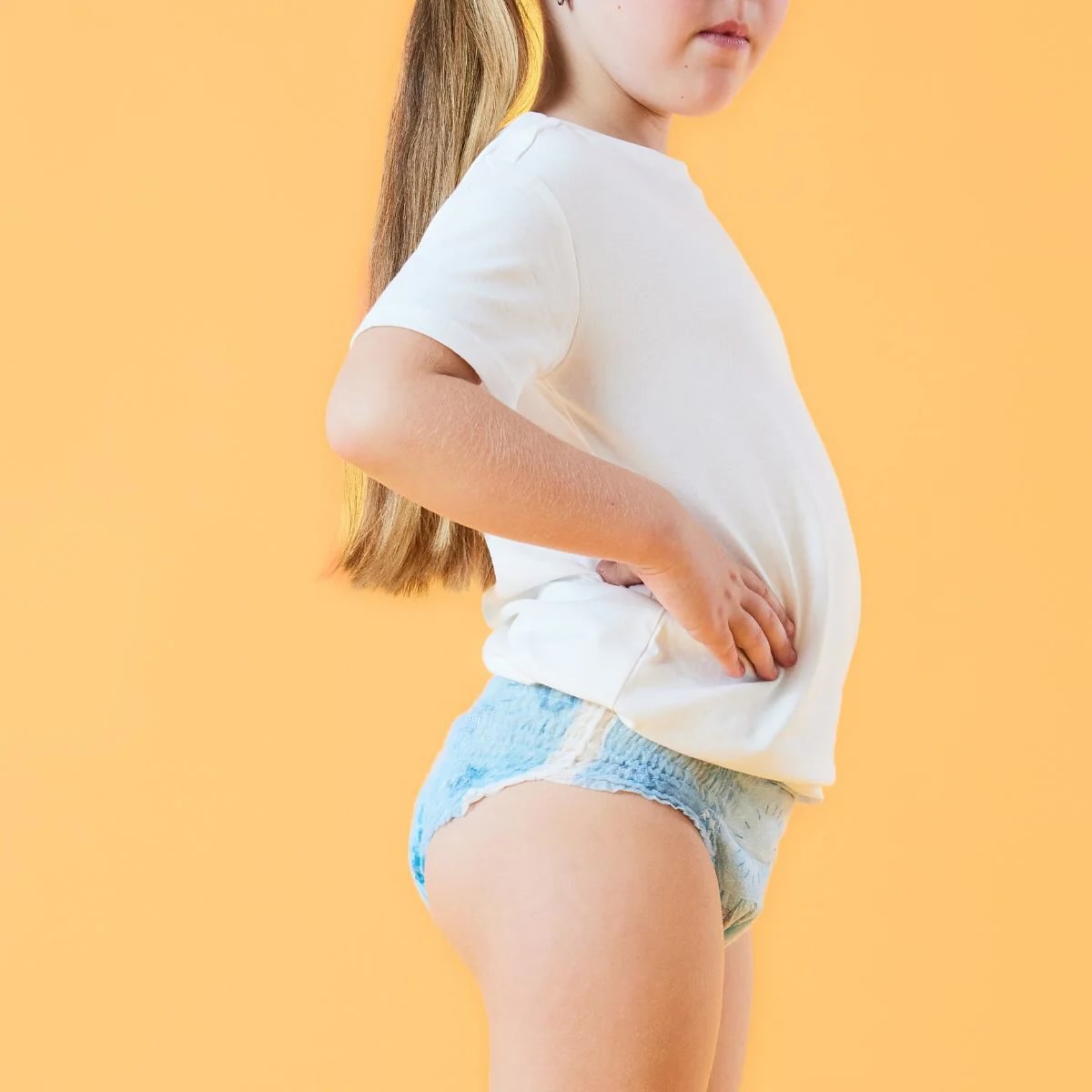
That’s exactly what youth-specific incontinence products are designed around. Look for:
- · Fitting leg cuffs reduce side leakage, even when lying down
- · A waistband built for kids' proportions - not an adult product scaled down
- · A soft inner lining that won't irritate skin during long wear
- · An absorbent core rated for the child's actual output, not just their age bracket
- · Cloth-like, quiet fabric that doesn't crinkle or show through clothes
Comparing Youth Nappies & Pull-Up Options
|
Product |
Suited To |
Weight & Waist |
Absorbency |
Style |
|
Active young children |
17–30kg, waist 40–70cm |
800ml — copes with moderate-to-heavy wetting plus bowel motions |
Pull-up, for boys & girls, elastic waist, breathable, odour control |
|
|
Older kids and teens - ideal for sleepovers and travel |
27–57kg, waist 60–80cm |
1000ml - built for day or night protection |
Pull-up, unisex, fast-absorbing core, snug leg cuffs, up to 12hrs odour control |
|
|
Younger children with bladder control issues & bedwetting |
17–27kg, waist 40–60cm |
748ml, high protection up to 12 hrs |
Pull-up, for boys & girls, anti-leak barriers, 360° comfi fit, soft quick-absorbing core |
|
|
Kids with frequent urinary leaks & bedwetting accidents |
25–37kg, waist 50–70cm |
1325ml, strong leak resistance, holds through the night |
Pull-up, unisex, double leg cuffs, fast-wicking core |
|
|
Teens sitting between youth and adult sizing |
35–55kg, waist 65–90cm |
1307ml, rapid high-capacity absorption |
Pull-up, unisex, no bulk, suits day and overnight wear, discreet |
|
|
Bowel and bladder needs, bedwetting, kids/teens 4+ incl. special needs |
Waist 40–70cm |
1550ml max absorbency, top-tier overnight capacity |
Tab-fastening diaper, anti-leak cuffs, built for overnight |
|
|
Children and small body types |
Under 40 kg, waist 50-80cm |
1914ml, highest absorbency for urine and faecal incontinence |
Junior nappies, for boys and girls, highly absorbent core, snug fit |
Getting the Fit Right: A Simple Measuring Guide
Fit is what actually stops leaks — more than absorbency rating alone.
Step 1 - Waist: Measure around the natural waistline, roughly 2.5cm above the belly button.
Step 2 - Hips: Measure around the widest point of the hips.
Step 3 - Choose by the larger number: If waist and hip measurements point to different sizes, go with the bigger one.
A few things that parents struggle with:
- Size charts aren't consistent across brands. Check the specific product, not a generic size chart.
- Sitting between two sizes? Go up rather than down, or switch to a tab-style nappies that can be adjusted.
- Teens nearing adult body size sometimes get a better fit from a "Small Adult" product than the largest youth size.
- Kids with sensory sensitivities or an unusual body shape often do better in refastenable tab-style diapers than pull-up styles, since the fit can be adjusted rather than forced.
Extras Worth Having on Hand
A handful of add-on products can take pressure off the daily routine:
· Booster pads: these pads are meant to be put inside a diaper or pull-up to stretch absorbency for long car trips, school days, or overnight wear.
· Underpads: Bed pads or chair pads are a waterproof disposable layer for beds, car seats, or wheelchairs that's fast to swap out at home or school.
· Mattress Protectors and waterproof sheets: offer protection to the bed, while feeling more like regular bedding.
· Skin care basics: barrier cream, fragrance-free wipes, and gentle cleanser to keep skin healthy between changes.
Making the Daily Routine Easier
Keep it predictable. A fixed change schedule - before school, after sport, before bed - takes the guesswork out for both of you. Where it's appropriate, let older kids and teens have a say in which product they use; a bit of ownership over the choice tends to help with confidence.
Keep it discreet where it matters. Slim, quiet, cloth-like products don't announce themselves under uniforms or gym gear. A small zip pouch of backups in a school bag, and knowing which bathroom is available for a quick change between classes, covers most day-to-day situations.
Keep the conversation low-key. How you talk about it tends to matter more than what you say. Treating it as a routine part of the day - no different to brushing teeth - while leaving room for questions and respecting privacy goes a long way.

Why Choose BetterCareMarket
We stock a dedicated range of diapers and pull-up pants sized specifically for kids and teens, not adult products sized down. Every product in our youth range is selected with waist and leg proportions, absorbency needs, and day-to-day usability in mind, from well-known brands parents already trust.
Whatever the situation — daytime accidents, overnight bedwetting, or incontinence tied to a medical condition — our range is built to help kids stay comfortable, confident, and free to get on with school, sport, and everyday life.
Browse our full range of youth diapers and pull-up pants, or reach out if you'd like a hand matching a product to your child's size and needs.
Frequently Asked Questions
What size should a 15-year-old wear?
Weight and waist/hip measurement matter far more than age at this stage. Many 15-year-olds sit in a Youth, though some will fit better in a Small Adult size depending on build. Measure directly using the guide above rather than going by age alone.
Are there options suited to autistic children with sensory sensitivities?
Yes. Look for products described as cloth-like, hypoallergenic, fragrance-free, or with stretchy/flexible sides. These reduce the noise, texture, and scent factors that can cause overstimulation. Tab-style briefs are also worth considering, since the fit can be adjusted rather than pulled on as a fixed shape.
What works best for cerebral palsy or limited mobility?
Tab-fastening briefs or nappies are usually the easier option here, since they can be opened and refastened while a child is lying down or seated. This makes it helpful for carers assisting with a change, and generally more adjustable than a pull-up style.
How is a youth product different from an adult one?
Youth nappies and pull-ups are cut specifically for smaller, still-growing bodies. They are slimmer, softer, and less bulky than an adult incontinence product. The leg cuffs are much smaller, making them much more suitable for thinner legs. Adult diapers can offer more absorbency, but often fit a smaller teen poorly. For teens in between sizes, the sizing guide in the product description can help pick the right side of that line.
How often should a pull-up or nappy be changed?
As a rough guide: check and change every 3–4 hours during the day, sooner if it's soaked. Overnight products can typically go 6–8 hours, but should still be checked in the morning. More active kids may need daytime changes more often, worth keeping an eye on comfort and moisture level rather than sticking rigidly to a schedule.
Can nappies and pull-up pants be worn safely overnight?
Yes. Incontinence products labelled for overnight use are built for longer wear specifically, with a higher-capacity core, stronger leak guards, and skin-friendly materials. Look for breathable fabric to help keep skin dry and comfortable through a full night's sleep.