When buying a blood pressure monitor, most people tend to look at the price or the brand. However other features are as important. Does the BPM cuff fit your arm? Is the device clinically validated, is it easy to use (especially if you're monitoring solo)? Is the memory of the tool sufficient for my use? And does it connect to my phone?
At BetterCareMarket, we've helped many elderly Australians stay on top of their cardiovascular health with blood pressure monitors. In this guide, we cut through the noise and give you the practical knowledge you need, to choose the right BPM for seniors to give you peace of mind.
What is a blood pressure monitors and why does it matter for seniors?
A blood pressure monitor can help diagnose high blood pressure. Modern devices can also track pulse rate, manage your medication, and screen irregular heartbeats. As we age, our heart rate and pulse regularity naturally change, making consistent monitoring even more important.
For carers and healthcare providers, having reliable data means being able to act quickly, without causing unnecessary worry or discomfort for the people they look after. The right device can genuinely be the difference between catching a problem early and missing it entirely.
6 Key Features to Look for in a Blood Pressure Monitor
1. Cuff Size
Getting the right cuff size is essential for an accurate reading. Most monitors come with a standard cuff, but if your upper arm is smaller or larger than average, you'll need to choose a size that fits properly. A cuff that's too tight or too loose can give you a false reading, so it's worth measuring your arm before you buy. For seniors, this means more reliable readings you can trust, without the worry of unnecessary trips to the doctor over a false alarm. On our website, you can choose from several cuff sizes.
2. Arm Cuff vs. Wrist Cuff
Blood pressure monitors generally come in two types: upper arm cuff or wrist cuff. Arm cuff monitors are generally considered more accurate, as the upper arm is closer to heart level and less affected by movement. Wrist monitors are smaller and more portable, which can be handy for travel, but they need to be positioned carefully - at heart level - to get a reliable reading. For most people, an arm cuff monitor is the better choice, as it's more forgiving if your arm position isn't perfect and gives you greater peace of mind that your reading is accurate.
3. Clinical Validation
Look for a monitor that has been clinically validated, meaning it's been independently tested and approved for precision by independent health bodies. Choosing a validated monitor means your home readings are as accurate as those taken at the GP's practice, giving you confidence in your numbers and supporting better conversations with your doctor about your health. At BetterCareMarket, our Blood Pressure Monitors are all clinically validated.
3. Ease of Use
A good monitor should be simple to set up and use, especially if you're checking your blood pressure on your own. Look for a large, clear display, simple buttons, and a cuff that's easy to put on with one hand if needed. For seniors, this means less frustration and more independence – you can check your blood pressure without needing help from someone else.
4. Memory and Tracking
Many monitors can store your past readings, which makes it easier to spot trends over time and share results with your doctor. Some models even let you save readings for multiple people, which is handy if you're caring for a partner or family member too. Built-in memory takes the pressure off remembering every number, and gives your doctor a clearer picture of your health between visits.
5. Irregular Heartbeat Detection
Some monitors include a feature that detects irregular heartbeats while taking your reading. This can be a useful early warning sign and is worth considering, particularly if you have a history of heart issues. This added layer of monitoring for elderly can help catch potential hypertension early, so they can be raised with your GP before they can become serious.
Our favourite 5 Blood Pressure Monitors for seniors
In this article, we'll take a look at our top 5 Blood Pressure Monitors. Each device was chosen based on their different features, as well as on their benefits because they help generate reliable, easy-to-read reporting that helps seniors and their carers make confident, informed decisions. Follow the links to skip straight to what you're looking for.
1. Value Blood Pressure Monitor – A&D Medical
The A&D Medical Value Blood Pressure Monitor is a compact, clinically validated device that strikes an excellent balance between features and affordability. It is an easy-to-use BPM, with one-touch operation. The device includes a colour-coded hypertension indicator, making it easy to interpret results at a glance.
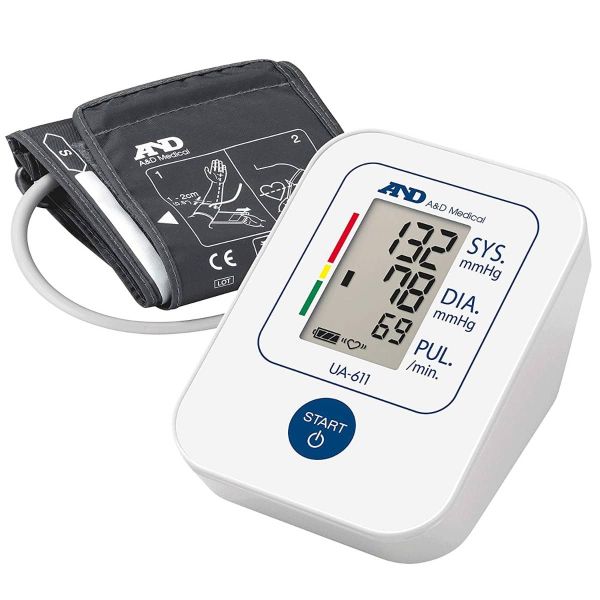
Pros:
- ✔️ Clinically validated for accuracy
- ✔️ 3-line display shows systolic, diastolic and pulse in one touch
- ✔️ Latex-free and metal-free auto-inflating cuff
- ✔️ 30-reading memory with date and time stamps
Cons:
- ❌ Upper Arm Cuff range (23–37cm) may not suit larger arms without purchasing an extension separately
- ❌ Single user only
Best for: Those seeking a clinically accurate, great-value monitor with easy-to-read colour-coded results and a trusted brand name
2. Home Blood Pressure Monitor – Able
The Able Home Blood Pressure Monitor is an Australian-designed and engineered upper arm device that combines simplicity with reliability. TGA certified for use in Australia and New Zealand, it's a solid choice for those who want a locally trusted brand Microlife.
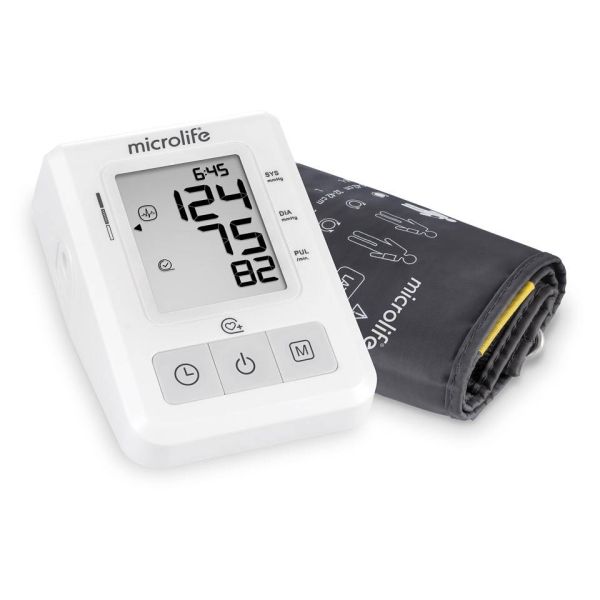
Pros:
- ✔️ Large cuff fits arms 22–42cm - suits a wide range of users
- ✔️ Cuff fit check - ensures correct placement
- ✔️ Pulse Arrythmia Detection
- ✔️ One-touch operation with large display
Cons:
- ❌ Stores only 30 readings
- ❌ Primarily designed for a single user
Best for: Those who prefer an Australian-certified device with easy-to-use occasional home readings.
3. Omron HEM 7144T1 Standard Blood Pressure Monitor
The Omron HEM 7144T1 is a smart, Bluetooth-enabled upper arm monitor that wirelessly syncs to iPhone and Android devices via the Omron Connect App. It features Omron's proprietary IntelliSense technology for precise, comfortable readings.
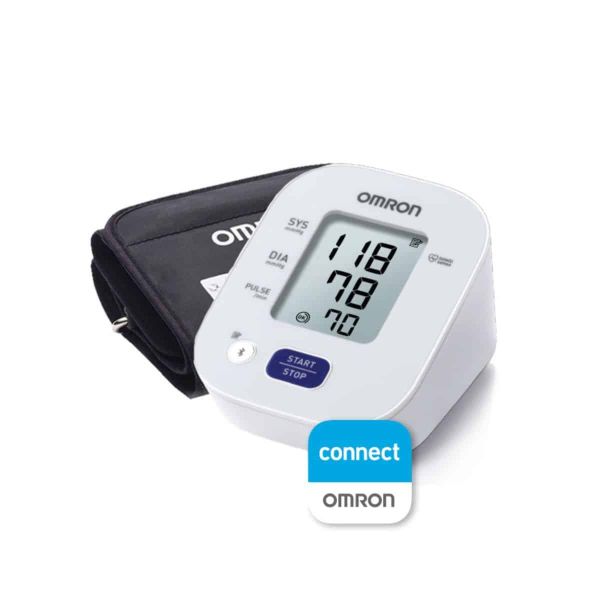
Pros:
- ✔️ Bluetooth connectivity - Syncs to iPhone and Android
- ✔️ IntelliSense technology - Cuff inflates automatically to the ideal pressure
- ✔️ Body movement detector - Flags invalid readings
- ✔️ Irregular Heart Rythm alert
- ✔️ Cuff fits arms 22–42cm
Cons:
- ❌ Higher price point
- ❌ Bluetooth and app features may feel complex for less tech-savvy users
- ❌ Stores only 30 readings on the device itself
Best for: Tech-comfortable users or family carers who want to remotely monitor readings via a smartphone app and share data with a GP.
4. Bluetooth Blood Pressure Monitor – A&D Medical
The A&D Medical Bluetooth Blood Pressure Monitor is a premium wireless option that pairs automatically with the A&D app on iOS, Windows and Android. It tracks trends over time with easy-to-read graphs and lets users share readings directly with a doctor or family member—making it a standout choice for connected health monitoring.
Pros:
- ✔️ Bluetooth connectivity – Auto-pairs with smartphone via the A&D app
- ✔️ App features graphs, reminders, and health goals
- ✔️ Clinically proven accuracy
- ✔️ Two user memory with 99 data readings
- ✔️ Easy one-button operation
- ✔️ Irregular heartbeat indicator
Cons:
- ❌ Slim Fit Cuff fits 22–32cm only - larger arms may need a larger cuff
- ❌ Requires a smartphone for full functionality
Best for: Users or carers who want seamless digital tracking, app-based reminders, and the ability to share health data with a doctor or family member
5. Digital Wrist Blood Pressure Monitor
For those who find upper arm cuffs uncomfortable or tricky to position, Digital Wrist Blood Pressure Monitor is a great alternative. Lightweight, portable and fully automatic, it's equally suited to home use or monitoring on-the-go. Simply slip it onto your wrist, press the button and it inflates automatically and reads your results aloud.
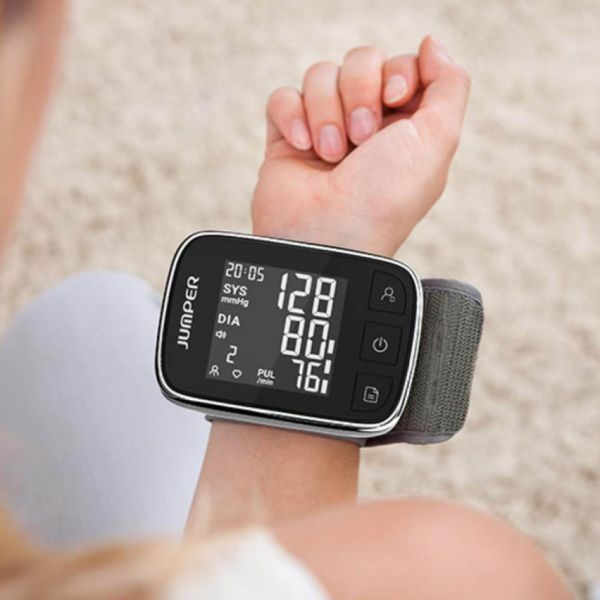
Pros:
- ✔️ Voice feature - reads results aloud, ideal for those with visual impairments
- ✔️ Colour-coded hypertension indicator
- ✔️ Stores up to 199 readings for 2 users - with date and time stamps
- ✔️ Compact and travel-friendly – Comes with a storage case
- ✔️ Irregular heartbeat detection included
- ✔️ Auto power-off – Preserves battery life
Cons:
- ❌ Wrist cuff suits smaller wrists (13.5–19.5cm) - may not suit everyone
- ❌ Must be held at heart level for accurate readings
Best for: Those who want a portable, easy-to-use monitor with voice readout—especially suited to users with visual impairments or those who monitor their blood pressure while travelling.
Which Blood Pressure Monitor is Right for You?
|
Monitor |
Best For |
|
Wrist Monitor |
Portable, on-the-go monitoring with voice readout |
|
Able Home Monitor |
Australian-certified device with a wide-fit cuff |
|
A&D Medical Value |
Colour-coded, clinically accurate and great value |
|
Omron HEM 7144T1 |
Bluetooth tracking synced to a smartphone |
|
A&D Medical Bluetooth |
App-based monitoring with sharing and trend graphs |
Most asked questions
How often should elderly people check their blood pressure?
This depends on your individual health and what your GP recommends. That said, many seniors find that daily or several-times-a-week monitoring gives them a much clearer picture of their overall health trends.
What does the "Irregular Heartbeat" symbol mean?
Most monitors display this symbol when your heart rhythm varies by more than 25% from the average. It can occasionally be triggered by movement or talking during the reading, so don't panic if it appears once. However, if it shows up consistently, it's worth having a conversation with your GP.
Do smart blood pressure monitors require technical knowledge to use?
Not at all. Most are built with simplicity in mind; many Blood Pressure Monitors operate with just a single button. If you do need a hand getting started, tutorials and customer support are usually easy to access.
Can regular blood pressure monitoring help avoid hospital visits?
Yes, and quite significantly. Catching unusual readings early means you can manage chronic conditions before they escalate, which reduces the likelihood of emergency situations and unnecessary trips to hospital.
What's the correct position for an accurate reading?
A few simple steps make a real difference:
- Sit in a supported chair with your feet flat on the floor and legs uncrossed
- Rest your bare arm on a flat surface so the cuff sits level with your heart
- Use the bathroom beforehand as a full bladder can push readings up by as much as 15 points
- Stay still and silent throughout the measurement
Can blood pressure medication affect the reading?
It can, yes. For the most accurate baseline, it's generally best to take your reading first thing in the morning, before medication, food, or exercise.
Conclusion
Choosing a blood pressure monitor can be a small but powerful step in managing seniors’ health. At BetterCareMarket, our goal is to make that choice a little easier, so the right model is just a few clicks away, ready to offer reassurance and help spot potential concerns early.
Read more on heart diseases in our blog What is a Normal Blood Pressure?
Disclaimer: Our content is not intended for the purpose of diagnosis or treatment. Please always consult your GP or medical professional before trying or using a new medical product.
About Bettercaremarket
Bettercaremarket is your leading supplier of healthcare essentials and your #1 destination for quality incontinence supplies, mobility equipment, independent living aids for seniors, disability aids, rehab and therapy products and medical supplies.
We help NDIS-participants, aged care facilities, home care package providers, occupational therapists and allied health providers find the best solutions to solve their need.